
Discover the types of trade school programs (Automotive, Welding, Diesel Tech, etc.) that lead to high-demand, high-paying careers at San Juan College.
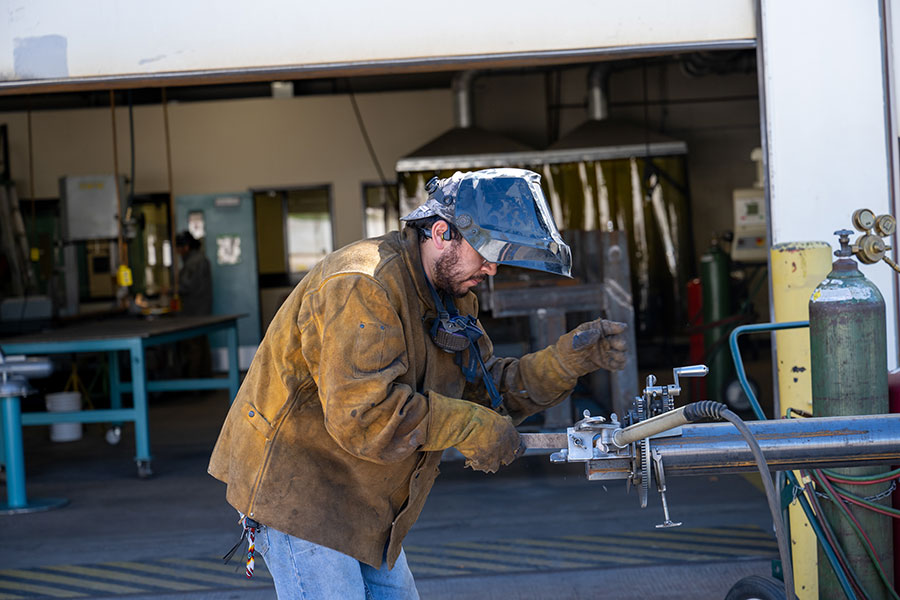
Choosing a career path doesn't always require a four-year degree. For many, the most direct route to a high-demand, high-paying career is through a trade program. Trade schools and community colleges provide hands-on technical training programs, called trade programs, that get students into the workforce quickly. From healthcare to construction, the variety of programs available today allows students to specialize in fields that align with their mechanical, technical, or creative interests.
According to the U.S. Bureau of Labor Statistics, many trade-related occupations are projected to grow faster than the average for all occupations through 2033. These roles are essential to the economy, offering stability and competitive wages without the significant debt often associated with traditional universities.
Trade Program Levels
Trade school programs typically result in one of two main credentials: a Certificate or an Associate's Degree (most commonly an Associate of Applied Science or AAS). Certificates offer the fastest path to the workforce, focusing strictly on specialized technical skills and often completing in one year or less.
A two-year AAS degree provides a broader, more comprehensive education, combining hands-on technical training with general education courses, which is excellent for those seeking management roles or a path to a bachelor's degree.
Common Types of Trade School Programs
1. Skilled Construction Programs (Carpentry, Electrical, HVAC)
Construction trades are the backbone of infrastructure. Carpenters build and repair structures, while electricians install and maintain power systems. HVAC Technicians specialize in heating, ventilation, and air conditioning, ensuring climate control in residential and commercial buildings. Many trade schools offer programs in carpentry, construction, HVAC maintenance, and electric technology. Learn more in our blog exploring the value of construction certificates.
Explore: Building Trades Certificate or AAS in Building Trades
2. Automotive Service Programs
The automotive sector offers a variety of specialized trade paths. Autobody (or collision repair) programs train technicians to restore vehicles after accidents, focusing on repairing or replacing damaged body panels, frames, and interior components, including advanced paint application techniques. Separately, Automotive Technology programs train general mechanics, focusing on diagnosing, maintaining, and repairing complex mechanical and electrical systems, from brakes and transmissions to engine performance. Additionally, many trade schools now offer Electrical Vehicle programs that teach how to maintain and repair fuel cells.
Some trade schools partner with specific manufacturers to provide specialized training and hands-on experience. Programs like the Automotive Service Educational Program (ASEP) or MOPAR Career Automotive Program (MCAP) are examples of these partnerships, which lead to careers as highly skilled master technicians.
Explore:
- Autobody Certificate or AAS in Auto Body
- Auto Technology Certificate or AAS in Automotive Technology
- Electrical Vehicle and Fuel Cell Certificate
3. Diesel Technology Programs
Diesel technology is a specialized trade path that focuses on heavy-duty vehicles and equipment. Technicians in this field learn to maintain and repair machinery that runs on diesel, including on-highway trucks and off-highway heavy equipment such as construction, mining, and agricultural machinery. These programs prepare students for the specialized requirements of the career, which is ideal for those who enjoy working with their hands and complex machinery.
Explore: Diesel Technology Certificates or AAS in Diesel Technology
Not sure whether auto mechanic or diesel mechanic is right for you? Read our blog, Auto Mechanic vs. Diesel Mechanic to hear the differences.
4. Police, Fire, and Criminal Justice Programs
Public safety trades prepare students for essential frontline roles. Police Science and Law Enforcement Academy programs provide the tactical and legal training required for peace officers. Fire Science trades focus on fire suppression, prevention, and emergency medical services. For those interested in the broader legal system, Criminology and Criminal Justice programs examine the nature of crime and justice administration at a foundational level.
Explore:
5. Truck Driving Programs
These programs focus on the specialized movement of goods and people. Traditional programs include a Commercial Driver’s License (CDL) program, which prepares students for professional trucking careers, allowing them to operate large and complex vehicles like semi-trucks or buses. You can read more about licenses and endorsements in our blog, How to Earn Types of CDL Licenses.
Explore: CDL Certificate
6. Healthcare and Wellness Programs (Medical Assisting, Massage Therapy)
Trade programs related to the medical field or wellness offer a fast track into the healthcare industry. Commonly, trade schools offer medical assistant or massage therapy associate degrees. Medical Assistants handle clinical and administrative tasks in doctors’ offices. Massage Therapy programs focus on anatomy and physiology to provide therapeutic treatment for wellness and pain management.
7. Industrial and Technical Programs (Welding, Drafting)
Welding is a critical skill for manufacturing and construction, involving the joining of metal parts using high heat. Drafting and Geographic Information Systems (GIS) programs provide the technical foundation for mapping, design, and architectural planning. Completing a trade program in these areas leads to direct career entry and apprenticeships in welding and civil engineering or construction settings.
Explore:
- Welding Certificate or AAS in Welding
- Drafting Certificate or AAS in Drafting
- GIS Certificate or AAS in GIS Technology
8. Personal Service and Culinary Programs (Cosmetology, Culinary Arts)
Cosmetology programs cover hair, skin, and nail care, preparing students for state licensing. Culinary Arts trades focus on food preparation, safety, and kitchen management for careers in the hospitality industry. Many trade schools offer programs in these fields to provide formal training in the service industry.
Explore: Cosmetology Certificate or AAS in Cosmetology and Barber
Benefits of Trade School
Choosing a technical or trade program offers several distinct advantages over a traditional four-year path:
- Faster Entry to the Workforce: Many certificate programs can be completed in months to about one year, allowing you to start your career quickly. Associate of Applied Science (AAS) degrees generally take two years.
- Lower Cost and Less Debt: Trade school is often more affordable than a university. Programs in New Mexico, for example, may be tuition-free thanks to the New Mexico Opportunity Scholarship.
- High Demand and Job Stability: Occupations in the trades are essential to the economy and are projected to grow faster than the average for all occupations.
- Hands-On, Specialized Training: Programs teach the specific technical skills required by employers, preparing you for immediate work.
Read more in our blog, How Do Trade Schools Work?
How to Decide Which Trade Program to Pursue
Choosing the right trade program is a personal decision that should align with your professional goals, interests, and preferred work environment. Consider these factors as you explore your options:
- Interests and Skills: Do you prefer working with your hands (e.g., welding, carpentry) or with complex systems (e.g., electrical, HVAC)? Do you enjoy working outdoors or in a clinical setting (e.g., medical assisting)?
- Job Outlook and Salary: Research the projected growth and typical wages for roles in your area. For instance, Diesel Service Technicians often earn a higher median salary than Automotive Service Technicians.
- Time Commitment: Determine if you need the quickest path (a one-year certificate) or if you want the broader skills of a two-year AAS degree.
- Prior Experience: If you have existing licenses or professional experience, some institutions like San Juan College may offer Credit for Prior Learning, which can shorten your required coursework.
Trade Programs FAQ
Get answers to some of the most common questions about technical and vocational programs:
The shortest programs are typically professional certificates, which often focus on foundational skills needed for entry-level jobs and can be completed in one year or less.
Program length varies based on the credential: Certificates can take one year or less, while an Associate of Applied Science (AAS) degree generally takes about two years of full-time study.
Salaries depend on the specific trade, location, and experience level. Trade roles offer competitive wages. For comparison, diesel service technicians earn a median salary of $60,640, compared to $49,670 for automotive service technicians. Plumbers and pipefitters earn a median annual salary of $62,970. As you progress in your career, wages rise.
Why Choose San Juan College for Your Trade Training?
At San Juan College (SJC), we bridge the gap between traditional trade schools and comprehensive community colleges. SJC offers many of the high-demand programs listed above within a supportive environment that provides extensive resources and financial aid opportunities.
Our facilities are equipped with the latest industry technology, ensuring you get the hands-on experience employers are looking for. Whether you are pursuing a certificate or an Associate of Applied Science, SJC provides an affordable, high-quality path to your future career.
Start Building Your Career Today
Whether you're looking to start a new career or develop skills for a growing industry, San Juan College provides an affordable path forward. Explore the School of Trades and Technology and start building your future.